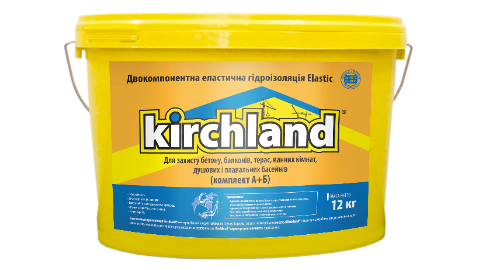
Elastic two-component elastic waterproofing
For protecting concrete, balconies, terraces, bathrooms, showers and swimming pools (component A + B).
Technical data
| Mortar consumption | Hand application: approximately 1.7 kg/m² per mm of thickness. Machine spray application: approximately 2.2 kg/m² per mm of thickness. |
| Application temperature, °C | +8°C to +35°C. |
| Disposal | Dispose of product residue as construction waste, and packaging as household waste. |
| Color | grey |
| Mix density (kg/m³) | 1,700 |
| Service temperature | -50°C to +70°C |
| Shelf life from date of manufacture | 12 months from the production date indicated on the packaging. |
| Adhesion (bond strength), MPa | 1 |
| Storage | In the manufacturer's sealed original packaging, in dry rooms on wooden pallets, 12 months from the production date indicated on the packaging. |
| Packaging | Kit, 12 kg |
Application
Pour component B (liquid) into a suitable clean container. Slowly add component A (powder) while mixing mechanically. Use a low-speed mechanical mixer.
Mix Kirchland Elastic thoroughly for several minutes, making sure the powder at the bottom and sides of the container fully dissolves. Continue until the mix is fully homogeneous, avoiding air entrainment. Kirchland Elastic must be applied within 60 minutes of mixing.
Apply the mix to the prepared surface in a thin layer with a smooth trowel. When applying the second coat, the first must still be fresh. The total thickness of the two coats should be about 2 mm.
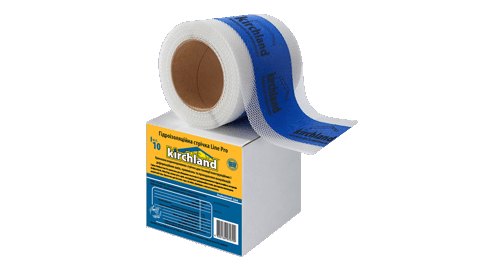
When using Kirchland Elastic to waterproof terraces, balconies, tanks and swimming pools, it is recommended to press an alkali-resistant reinforcing fibreglass mesh into the still-fresh first coat for reinforcement. The mesh is also used on substrates with minor cracks or subject to heavy loads.
After laying the mesh, level the surface with a smooth trowel and apply the second coat of Kirchland Elastic. The second coat can be applied once the first has set (after 4-5 hours). After applying Kirchland Elastic, the material must cure for 5 days before ceramic tile can be laid.
Under favourable climatic conditions on absorbent substrates, this period can be shortened to 24 hours.